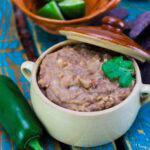
Refried Beans (Oil-Free)
These easy homemade refried beans are rich, creamy, and completely oil-free. Made with simple ingredients and ready in minutes using canned or freshly cooked beans, they’re a healthy, flavorful addition to tacos, burritos, bowls, and more.
Servings: 5 servings
Calories: 45kcal
Ingredients
Slow Cooker Beans (skip this if using canned beans)
- 1 cup dry pinto beans + reserve 1/4 cup bean juice (this will make 3 cups cooked beans) (or 2 cups for batch cooking)
- 1 clove garlic (or 2 cloves for batch)
- 1 teaspoon sea salt (or 2 teaspoons for a batch)
Refried Beans
- 3-4 cups cooked pinto beans (fresh or canned) equals 2 (15 oz) cans
- 1/4 cup vegetable broth
- 1/2 teaspoon onion powder
- 1/2 teaspoon garlic powder
- 1/4 teaspoon cumin
- 1/4 teaspoon sea salt or to taste
- 1 teaspoon lime juice (about 1/2 medium lime)
- 1 tablespoon chipotle sauce (or to reach desired spicyness)
Instructions
- If you want to use canned beans, skip this first step because the beans will already be cooked.When making dry beans from scratch, I like to cook a whole pound of dried beans (5-6 cups after cooking) and eat them whole throughout the week or freeze them for later.You can do that too, or I'm also going to give you instructions for making only what is needed for this refried beans recipe--3 cups cooked beans. The beans will cook for a long time and will absorb liquid as they soften.For batch cooking the beans, add 1 pound of dry beans, 2 teaspoons of salt, 2 cloves of garlic, 2 bay leaves, and 8-9 cups of water to your slow cooker. Cover and cook on HIGH for 6-8 hours or LOW for 8-10 hours.For making only enough beans for this recipe, add 1 cup of dry beans, 1 teaspoon salt, 1 clove of garlic, 1 bay leaf, and 4-5 cups of water to the slow cooker. Cover and cook on HIGH for 4-6 hours or LOW for 6-8 hours.
- In a saucepan, add the vegetable broth, onion powder, garlic powder, cumin, salt, lime juice, and chipotle sauce and cook on medium heat, stirring to combine. Continue to stir occasionally as it begins to simmer.
- Add 2 cups fresh-cooked beans + 1/4 cup of the bean juice. Stir, cover, and let cook for about 5 minutesIf using canned beans, include the liquid (no need to drain).
- Reduce the heat to low. Using a potato masher or the back of a fork, mash about half of the beans, or until you reach your desired consistency. Continue cooking uncovered if the mixture is too thin, allowing excess liquid to evaporate. If the beans become too thick, simply add a little more broth.
- Taste and adjust seasoning as needed, adding more salt or lime juice if desired. Serve warm, or cover and keep warm until ready to serve.
Video
Notes
Helpful Tip: Step-by-step photos are included above to guide you through the recipe and make it easier to follow. Storage instructions and FAQ are also available in the article about this recipe.
Homemade versus Store-Bought Beans:
When it comes to homemade vs. store-bought beans, the biggest differences aren’t in how they look—but in flavor, nutrition, and flexibility. Homemade beans tend to have a richer, more developed taste, and you have full control over the ingredients, including the amount of salt and seasonings. They’re also incredibly budget-friendly, since dried beans are inexpensive and yield a large amount once cooked.
On the other hand, store-bought beans are all about convenience. They require no prep time, have a consistent texture and flavor, and are a great option when you need to get a meal on the table quickly. Having a few cans on hand can be a lifesaver for busy days.
The same idea applies when choosing between vegetable broth and water. Vegetable broth adds an extra layer of flavor that enhances the overall dish, while water works perfectly well in a pinch when you need something quick and simple.
Nutrition
Serving: 0.5cup | Calories: 45kcal | Carbohydrates: 8g | Protein: 2g | Fat: 0.03g | Fiber: 2g | Sugar: 0.1g