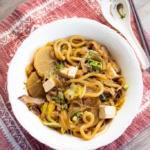
Udon Noodle Soup with Vegetables
This delicious udon noodle soup recipe is centered around thick chewy udon noodles in a rich dashi-based broth with vegetables, tofu, and tender mushrooms. It is a warm, comforting vegan soup that will satisfy the whole family.
Servings: 6 servings
Calories: 176kcal
Ingredients
- 7 cups dashi broth (recipe linked)
- 2 cups daikon cut into 1/4" circles
- 1/3 cup sake
- 3/4 cup low-sodium soy sauce
- 1/2 cup sweetener (pure cane sugar, date sugar, etc)
- 1 large onion sliced into long thin strips
- 1/2 cup shitake or king oyster mushrooms sliced thin
- 2 bundles udon noodles
- 2 cups napa or bok choy cabbage sliced into 2" squares/see photo above
- 1 cup soy curls, rehydrated
- 3 green onions sliced into 2" diagonal strips
- 1 bundle glass noodles (1" diameter, about the circumference of a quarter)
- 14 oz tofu (drained, pressed, and diced into small squares)
- 1/2 cup bean sprouts
Instructions
Prep Work
- You’ll want to make your kombu dashi ahead of time. Dashi can be stored in the fridge for up to 14 days or frozen for up to three months. If you need to make it the day of, do it at least 2-3 hours beforehand for best results.
- Rehydrate the soy curls in vegetable broth for 10 minutes and cut into 2” strips.
Prep Ingredients
- To begin, you will need to wash, drain, and slice all of the vegetables so they will be ready to add as soon as the soup base is ready. Slicing the veggies into strips or squares aids in eating with chopsticks.
Cooking Instructions
- Begin by boiling daikon disks in the kombu dashi soup base in a stock pot for 10 minutes to soften them before adding the rest of the ingredients.
- Once the daikon is soft enough to pierce with a fork, begin adding the rest of our ingredients to the stockpot in the following order.
- First, add the sake to the broth to allow time for the alcohol to evaporate.
- Next, add the soy sauce and half of the sugar and stir until the sugar is completely dissolved.
- Now it’s time to start adding the onions, mushrooms, udon noodles, napa, soy curls, green onions, glass noodles, and tofu. I layer them in this order to protect the more fragile ingredients from overcooking and crumbling from the weight of the other ingredients.
- Once all the ingredients are in the pot, sprinkle the remaining sugar over the top, cover, and simmer over medium-high heat for an additional 10 minutes.
- Add the sprouts about two minutes before cutting off the heat. They are tender and will only take a second to steam.
- When the glass noodles are clear and soft and all the ingredients have simmered in the soup base enough to absorb all the wonderful flavors, it’s time to eat!
- Serve in individual bowls with chopsticks (or forks) and a soup spoon. This dish is best served hot. You can refrigerate leftovers for up the three days.
Video
Notes
Tips & Suggestions:
In this recipe, I like to slice the daikon first because it will need to cook the longest. If you don’t need the entire daikon root, cut it in half and use the top portion, the part with the leaves attached, first. Removing the leaves (that absorb moisture) extends the shelf life of the daikon radish. Wrap the unused portion of daikon tightly in plastic wrap and store it in the fridge for future use. Slice off the top (the leafy part) and peel the section you will be using with a vegetable peeler, just like you would a carrot, and then slice into ¼” circular disks.
If you’re using a new full head of napa cabbage, instead of slicing the strips horizontally from top to bottom, first slice it long-wise, splitting it straight down the middle. This way you will have two complete halves, one for now and one for your next meal. You can see the texture of napa cabbage changes from leafy near the top to crunchy as you work your way down and this way you get to experience all the textures with each meal. The photo above shows what I mean.
If you want to meal prep and make this an easy weeknight meal, you can make the sukiyaki udon sauce ahead and store it in an airtight container in the refrigerator. Prepare your toppings (veggies and tofu) a day ahead and store them in a separate covered container until you are ready for them. When you are ready to make this recipe, just pour the broth into the stock pot over the vegetables and noodles when you are ready to cook and serve them.
Nutrition
Serving: 2cups | Calories: 176kcal | Carbohydrates: 40g | Protein: 10g | Fat: 3g | Fiber: 2g | Sugar: 7g