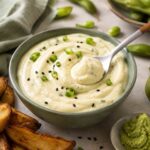
Easy Wasabi Mayo
This plant-based wasabi mayo is good served as a dip for fries and veggies or as a spread for burgers and sandwiches. It is gluten-free, dairy-free, vegan, and oil-free!
Servings: 10 servings
Calories: 20kcal
Ingredients
Plain Mayo Ingredients
- 1 13-14 oz block silken firm tofu see notes
- 1 tablespoon dijon mustard
- 1 tablespoon sweetener pure cane, sucanat, maple syrup
- 1 tablespoon red wine vinegar or lemon juice
- 1/4 teaspoon sea salt
Wasabi Mayo
- 1 cup vegan mayo homemade recipe included
- 1 tablespoon wasabi powder
- 1 teaspoon water
- 1/2 teaspoon ground ginger powder or ginger paste
- 1 tablespoon pure cane sugar or other sweetener
- 1/4 teaspoon salt or to taste
Instructions
- If you’re using wasabi powder, mix the powder and cold water in a bowl. Whisk it into a paste and let it rest for 5 minutes or so while you’re making the mayonnaise.
- Open the tofu container and drain the water. Next, place it in a tofu press or on paper towels for 10-15 minutes.
- If you’re using shelf-stable tofu which doesn’t need refrigeration (and my preference), you won't need to press it. However, the refrigerator-type tofu will need to be drained and pressed. This article, Easy Tofu Recipes, has more information on the different types of tofu and how to use them. This article, Easy Tofu Recipes, has more information on the different types of tofu and how to use them.
- Put all the mayo ingredients (not the wasabi paste) in a blender and blend until smooth. Pour one cup of it into a bowl.
- Add the wasabi paste, ginger, sugar, and salt to the mayo. I recommend starting with a tablespoon of wasabi paste mixed with a cup of mayonnaise. You can increase the amount, ½ teaspoon at a time until you are satisfied with the heat and flavor.
Video
Notes
Tips & Suggestions:
I have included step-by-step photos and directions above to ensure your first attempt will be successful.
Tofu- Firm or extra firm silken tofu from a shelf-stable box, or the softest refrigerated tofu, are ideal for creams and sauces because they blend into the smoothest, creamiest texture. These types of tofu offer the perfect consistency for making velvety vegan dressings and dips.
Mayonnaise- Store-bought mayonnaise will work, but it is higher in fat and calories.
Storage- Keep wasabi mayo in the fridge and let it chill until you are ready to serve. It is best served chilled and does not freeze well. It should last for approximately 7-10 days in an airtight container in the refrigerator.
About the Chef- Drenda-Michell Brennan lived in Japan in the 1990s and learned many traditional Asian cooking methods. She is the mother of 3 Japanese-American grown children and grandmother (HuneyGram) to 8 grandchildren. She also happens to be the sister of Terri Edwards, of EatPlant-Based. Read more about her story in this article, From Veggie Hater to Plant-Based.
Nutrition
Serving: 2tablespoons | Calories: 20kcal | Protein: 0.14g | Fat: 0.6g | Sodium: 91mg | Sugar: 1.3g