
Cyclosporiasis: What Plant-Based Eaters Should Know Right Now
If you’re like me, you’ve probably been hearing more and more about the recent cyclosporiasis outbreak in the news and wondering what it means for those of us who eat a whole-food, plant-based diet. Since fresh fruits and vegetables are a big part of our daily meals, I wanted to take a little time to share what I’ve been learning from reputable public health sources, along with the simple precautions I’m personally taking at home. While it’s important to stay informed, there’s no need to panic. My hope is that this article helps you feel confident, prepared, and encouraged to continue enjoying the many health benefits of eating plenty of fresh produce
Want to Save This Recipe?
Enter your email & I’ll send it to your inbox. Plus, get great new recipes from me every week!
By submitting this form, you consent to receive emails from EatPlant-Based
If you’ve been following the news lately, you’ve probably heard about the growing cyclosporiasis outbreak affecting several states, with Michigan reporting the largest number of cases. Since so many of us enjoy plenty of fresh fruits and vegetables, I wanted to share a few simple precautions I’m planning to take myself.
The illness is caused by Cyclospora, a microscopic parasite that can contaminate fresh produce. At this time, health officials have not identified a specific grower, supplier, or produce item as the source of the outbreak, although lettuce and salad greens are among the foods being closely investigated. The FDA and CDC continue to work with state health departments to trace the source.
Simple Ways to Reduce Your Risk
The Michigan Department of Health and Human Services recommends these precautions while the investigation continues:
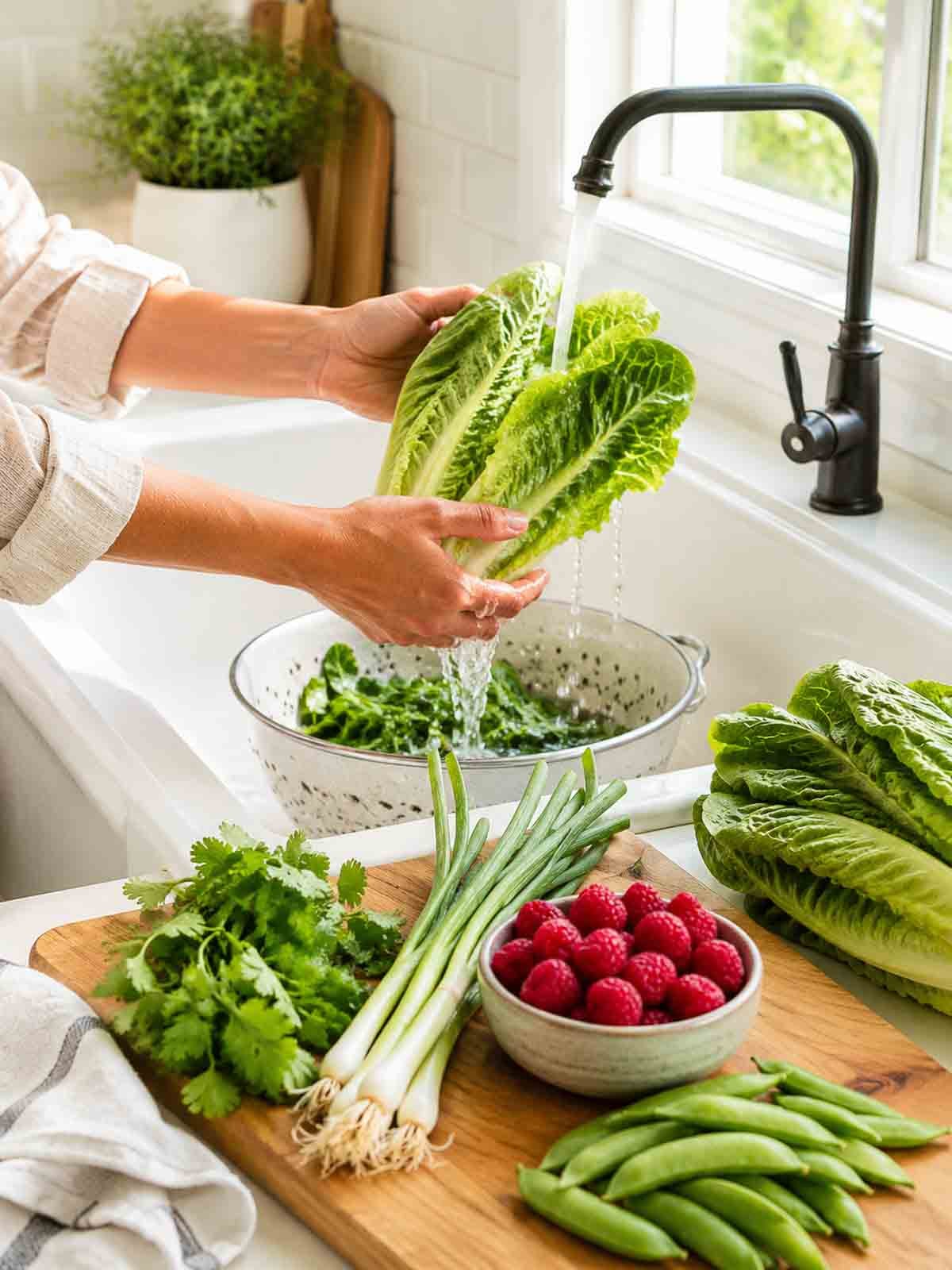
- Choose whole heads of lettuce instead of bagged salad mixes when possible. Remove the outer two or three leaves and wash the remaining leaves thoroughly under running water.
- Wash fresh herbs like cilantro and basil carefully, separating the leaves as you rinse them.
- Trim and wash green onions well, removing the outer layer before using.
- Rinse snow peas under running water while gently rubbing the surface.
- Be extra cautious with raspberries. Their delicate, bumpy surface makes them difficult to clean thoroughly. If possible, enjoy them cooked in recipes like crisps, cobblers, or jams, or consider using frozen raspberries.
Whenever practical, cooking vegetables is the safest option, since heat destroys the parasite. Simply washing produce may not remove all traces of Cyclospora, but it’s still an important step for reducing risk.
How to Wash Produce During the Cyclosporiasis Outbreak
While no method can guarantee that Cyclospora will be completely removed from fresh produce, taking a few extra steps can help reduce your risk. Start by washing your hands before handling fruits and vegetables. Then rinse produce thoroughly under cool running water. For firm fruits and vegetables such as cucumbers, carrots, potatoes, and melons, gently rub or scrub the surface with a clean produce brush while rinsing.
For leafy greens like lettuce, separate the leaves and rinse each one individually under running water. If you’re using a whole head of lettuce, remove and discard the outer two or three leaves before washing the rest. Fresh herbs, such as cilantro and basil, should also be separated and rinsed well.
Delicate fruits like raspberries are much more difficult to clean because of their tiny crevices. That’s one reason Michigan health officials have recommended extra caution with raspberries during this outbreak. When practical, consider using frozen raspberries in smoothies or cooking fresh raspberries in recipes like sauces, crisps, or jams until the source of the outbreak has been identified.
It’s also important to know that produce washes, vinegar soaks, baking soda, or soap have not been shown to eliminate Cyclospora. Plain running water remains the recommended method for washing produce, and cooking fruits or vegetables when appropriate is the most effective way to destroy the parasite.
Remember, these are temporary precautions while health officials continue investigating the source of the outbreak. My goal isn’t to avoid fruits and vegetables—it’s simply to enjoy them as safely as possible.
What I’m Personally Doing
For now, I’m making a few temporary changes until health officials identify the source of this outbreak.
I normally buy prewashed mixed greens in containers or bags because they’re convenient. However, for the time being, I’ll be buying whole heads of lettuce instead. Whenever I use head lettuce, I always remove the outer few leaves and thoroughly wash the remaining leaves under cool running water, even when there’s not an outbreak.
We also eat a lot of fresh cilantro. Thankfully, it’s summertime, and I’m planning to pick up a couple of plants so we’ll have a fresh supply right outside the door.
As for fruit, I’ll continue enjoying plenty of it, but I’ll be buying more locally grown produce when I can and keeping frozen fruit on hand as well. Frozen fruit is a great option for smoothies, breakfast oatmeal, and desserts.
These are simply the precautions I’m choosing to take while we wait for more information. I still believe fruits and vegetables are some of the healthiest foods we can eat, and I certainly don’t want this outbreak to discourage anyone from including them in their daily meals.
Don’t Panic—Just Take a Few Extra Precautions
While it’s important to take this outbreak seriously, there’s no need to panic. Most people who become infected with Cyclospora recover completely with appropriate treatment, and no deaths have been reported in connection with the current outbreak. The biggest concern is that symptoms—especially diarrhea—can last for weeks if left untreated.
As someone who eats a whole-food, plant-based diet, I’m not giving up fresh produce. Fruits and vegetables remain some of the healthiest foods we can eat, and the benefits of eating them far outweigh the risks. Instead, I’ll simply be washing my produce more carefully than usual, choosing cooked vegetables more often when it makes sense, and following updates from public health officials as they continue to investigate the source of the outbreak.
If you develop persistent watery diarrhea, stomach cramps, nausea, fatigue, or unexplained weight loss—particularly if symptoms last more than a few days—contact your healthcare provider. Since Cyclospora isn’t always included in routine stool testing, be sure to mention your concern so the appropriate test can be ordered if needed.
I have included an FAQ below with more information that might be helpful.
A Quick Note
I’m not a doctor, food safety expert, or infectious disease specialist. I’m simply sharing what I’m learning from reputable public health sources, along with the personal precautions I’m choosing to take while this outbreak is being investigated.
My hope is to help our wonderful plant-based community stay informed, make thoughtful decisions, and continue enjoying the many health benefits of eating plenty of fruits and vegetables. As new information becomes available, I’ll do my best to share any important updates with you.

About Terri Edwards
Hi guys! I’m the content creator behind EatPlant-Based and a licensed Food for Life instructor with the Physicians Committee for Responsible Medicine. I’m passionate about sharing healthy recipes and tips to help others care well for their health and the bodies God has given us. I’m so glad you’re here! Read More…

Frequently Asked Questions
Cyclosporiasis is an intestinal illness caused by a microscopic parasite called Cyclospora cayetanensis. People become infected by eating food or drinking water contaminated with the parasite. In the current outbreak, investigators believe contaminated fresh produce is the source, but they have not yet identified a specific grower, supplier, or produce item.
The most common symptom is frequent watery diarrhea. Other symptoms may include stomach cramps, nausea, bloating, loss of appetite, fatigue, low-grade fever, and weight loss. Symptoms typically begin about one week after consuming contaminated food.
It can be. While most healthy people recover completely with proper treatment, symptoms can last for weeks or even longer if left untreated. The biggest concern is dehydration from prolonged diarrhea. Fortunately, no deaths have been reported in connection with the current outbreak.
Health officials have not identified a specific food as the source. However, because of current investigations and previous outbreaks, extra care is being recommended with leafy greens, cilantro, basil, green onions, raspberries, and snow peas.
Washing fresh produce under cool running water is recommended and may help reduce contamination, but it does not guarantee that all Cyclospora parasites are removed. Whenever practical, cooking vegetables is the safest option because heat destroys the parasite.
Yes. Cyclosporiasis is usually treated with a prescription antibiotic. If you develop persistent diarrhea or other symptoms after eating fresh produce, contact your healthcare provider. Be sure to mention Cyclospora, since it may require specific stool testing that isn’t always included in routine tests.


Thank you so much for your well researched article. It is often hard to stay calm when news reports are so concerning. From a convenience perspective, I was wondering what your opinion is on buying frozen greens such as kale, collards, or spinach. Do you think these are any safer? Would they also need to be rinsed before cooking (which would negate their convenience factor)? Or, are canned vegetables the safest way to go for the short-term until we get a more specific understanding of the cause of this outbreak? Thank you again. I greatly appreciate and trust your opinion. BTW, love your recipes!
I’m so glad you found the article helpful. That’s a great question. My thinking is that frozen greens were likely harvested, processed, and packaged well before this current outbreak, so they would seem less likely to be affected. Since they’re typically washed and blanched before freezing, I personally wouldn’t rinse them before cooking. Frozen vegetables seem like a reasonable option for anyone who wants to be extra cautious while still enjoying plenty of healthy greens.
Thanks again for reaching out, and I’m so happy you’re enjoying the recipes!
Thank you so much Terri for the valuable information and the practical tips.
We appreciate you very much.
God Bless You!
Sandra
You are so welcome! I’m glad it’s helpful. Blessing to you, too!
Terri – I read washing your veggies/fruit in one part vinegar to 4 parts water helps to remove bacteria – do you think this would be helpful with this outbreak?
I haven’t heard any data from the experts on it, but it certainly couldn’t hurt. Sounds very reasonable to me. UPDATE: Someone just left this comment, “I Live in Michigan where it started and have the most cases. Nothing cleans it off except maybe running water and scrubbing if you can scrub every surface of the produce. It is a sticky hard shell parasite. Nothing breaks it down. You have to scrub it to get it off. Raspberries are the worse cuz of the crevices.”–Cathy T.
Thank you! Good, common sense information.
Thank You Terri! You are a great resource for recipes and tips. One question I have : If I grow my own vegetables can they be contaminated with cyclosporiasis? I have not read any information about this! Thank you again Denise
Thank you so much for your kind words! From everything I’ve been reading, homegrown vegetables are generally considered lower risk, especially if you’re using clean water and good gardening practices. Cyclospora is most often linked to contamination somewhere along the commercial growing, harvesting, or processing chain, often involving contaminated water. I would still give homegrown produce a good rinse before eating, but I personally wouldn’t be concerned about harvesting vegetables from my own garden.
Thank you for your voice of reason and calm! Not to mention the good safety tips. God bless♥
Thank you so much! That was exactly my hope—to share practical information without causing unnecessary fear. We can take sensible precautions while continuing to enjoy the many health benefits of fruits and vegetables. I appreciate your kind words, and God bless you too!