
Plant-Based Emergency Food Supply: What to Stock When the Power Goes Out
Being prepared doesn’t have to mean panic buying! Learn how to build a healthy vegan emergency food supply with shelf-stable foods, simple no-cook meals for power outages, and practical tips for keeping your family fed during unexpected power outages.
Want to Save This Recipe?
Enter your email & I’ll send it to your inbox. Plus, get great new recipes from me every week!
By submitting this form, you consent to receive emails from EatPlant-Based
Lately, I’ve been paying attention to the growing number of countries encouraging their citizens to keep emergency food, water, and other essential supplies on hand.
The reasons vary, from severe weather and extended power outages to supply chain disruptions and other unexpected situations. And it has me thinking that now is a good time to take another look at what we have stocked in our own home.
Living in rural North Carolina, we’re no strangers to storms and power outages. I’ve always believed in keeping a well-stocked pantry, but there’s something important I’ve been thinking about lately. Having plenty of dried beans, brown rice, and other healthy staples is wonderful, but what happens if the electricity goes out and you have no way to cook them? That’s why I’ve decided to be more intentional about stocking up on shelf-stable, ready-to-eat plant-based foods.
I’m not doing this out of fear, and I’m certainly not encouraging anyone to rush out and start panic buying. Quite the opposite! I think the best time to prepare is when everything is running normally, grocery shelves are full, and we can pick up a few extra things during our regular shopping trips. That way, if something unexpected happens, we’re not scrambling to find what we need.
And the good news is that preparing a healthy, plant-based emergency food supply doesn’t have to be complicated or expensive.
For even more ideas, be sure to check out my collections of Pantry Staple Recipes and plant-based road trip snacks and meals. Both are filled with practical food ideas that can also come in handy when planning your emergency food supply!
Why Every Household Should Have an Emergency Food Supply
Most of us don’t give much thought to how dependent we are on electricity until it suddenly disappears.
Without power, we may not be able to use our refrigerators, freezers, electric stoves, microwaves, or even our water supply if we depend on an electric well pump. And depending on the situation, getting to the grocery store may not be an option either.
That’s why emergency preparedness organizations recommend keeping enough food and water at home to get through at least several days without outside assistance.
I think starting with a three-day supply is a sensible goal. Once that’s in place, you can gradually build toward a week or two if your budget and storage space allow.
The goal isn’t to stockpile everything in sight. It’s to have enough of the foods your family already enjoys to make life a little easier during an unexpected situation.
The Difference Between Pantry Staples and Emergency Foods
This is something I think is especially important for those of us who follow a whole-food, plant-based diet. Our pantries are often filled with wonderful staples like dried beans, lentils, brown rice, oats, and whole-grain pasta.
These are nutritious, affordable foods that store beautifully, but most require water, heat, or both before they can be eaten.
For this emergency pantry, I’m focusing primarily on foods that are already cooked or can be eaten straight from their packages.
For example:
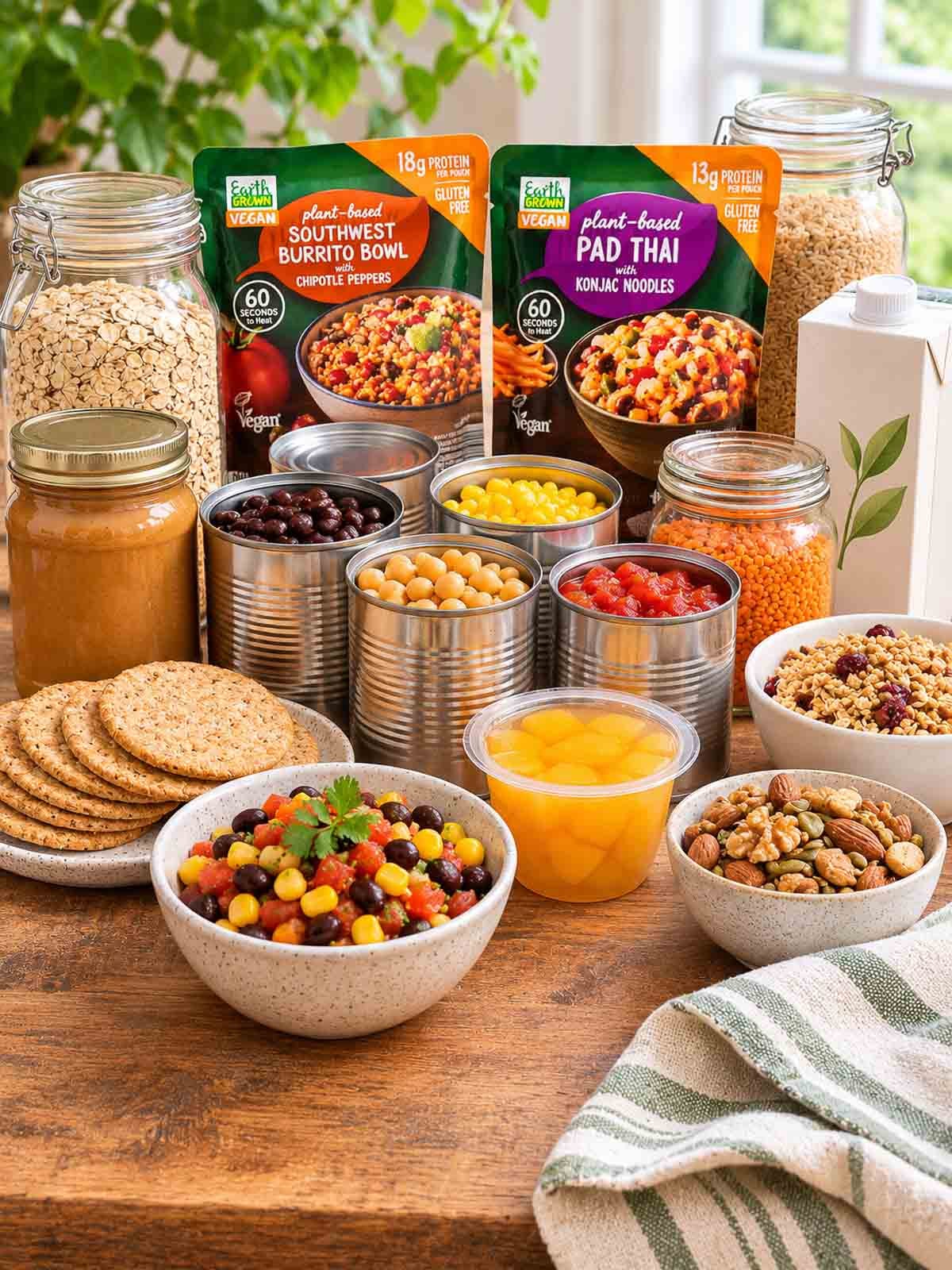
🫘 Canned beans instead of dried beans
🌽 Canned corn instead of frozen corn
🥣 Ready-to-eat cereals instead of oatmeal that requires cooking
🥛 Shelf-stable plant milk instead of refrigerated milk
🍑 Canned fruit instead of fruit that needs refrigeration
🥘 Ready-to-eat plant-based meals instead of frozen dinners
That doesn’t mean we should stop stocking our usual pantry staples. It simply means having some additional options available if cooking becomes difficult or impossible.
Best Shelf-Stable Plant-Based Foods to Keep on Hand
Here are some of the foods I’m focusing on as I build our emergency pantry.
1. Canned Beans and Legumes
Canned beans are one of my favorite emergency foods because they’re affordable, filling, and already cooked.
Some good options include:
- Black beans
- Chickpeas
- Kidney beans
- Pinto beans
- Cannellini beans
- Ready-to-eat lentils
They’re excellent sources of plant protein and fiber, and most can be eaten without heating. You can combine them with canned vegetables and salsa, mash them for sandwich spreads, or simply season them and eat them with whole-grain crackers.
I normally prefer no-salt-added varieties when available, but during an emergency, having food on hand is the bigger priority.
My tip: Look for pull-tab cans when possible, but always keep a manual can opener with your emergency supplies.
2. Canned Vegetables
Canned vegetables are another terrific option because they’re already cooked and don’t require refrigeration until opened.
I’m especially interested in keeping extra cans of:
- Corn
- Green beans
- Peas
- Carrots
- Diced tomatoes
- Beets
- Mixed vegetables
These can be combined with canned beans for simple, nutritious meals. Canned corn is especially useful because it works beautifully in bean salads, salsa, and even my easy black bean chili.
3. Canned Fruit and Unsweetened Applesauce
I like keeping individual servings of fruit on hand because they’re convenient, shelf-stable, and easy to enjoy without any preparation.
Look for single-serving fruit cups packed in 100% fruit juice rather than heavy or light syrup, along with unsweetened applesauce.
Some convenient options include peaches, pears, pineapple, mandarin oranges, and mixed fruit. These are great options for emergency breakfasts, snacks, or a little something sweet.
The individual containers are especially helpful during a power outage because you can open just what you need without worrying about refrigerating leftovers.
4. Nut Butters, Nuts, and Seeds
Peanut butter is one of the easiest foods to keep stocked for emergencies. It doesn’t require cooking, provides calories and plant-based protein, and can be eaten with crackers, bread, or fruit. Other good choices include almond butter, walnuts, almonds, pumpkin seeds, sunflower seeds, and trail mix.
These foods are especially useful because they provide concentrated energy without taking up much storage space.
5. Whole-Grain Crackers, Bread, and Ready-to-Eat Cereals
I love the convenience of whole-grain crackers for emergency meals. My favorite is Mary’s Gone Crackers, and least expensive place I’ve found to buy them is Walmart. They can be paired with peanut butter, canned beans, or other ready-to-eat spreads.
Other possibilities include shelf-stable tortillas, crispbread, granola, and ready-to-eat whole-grain cereals.
Just remember that fresh bread and tortillas don’t necessarily keep as long as canned foods, so choose packages with appropriate shelf lives and rotate them regularly.
6. Shelf-Stable Plant Milk
Shelf-stable soy milk and almond milk are great additions to an emergency pantry. They can be stored unopened without refrigeration when labeled shelf-stable, making them convenient for cereal, granola, or drinking. I especially like unsweetened varieties.
One important thing to remember is that most shelf-stable plant milks need refrigeration after opening. For that reason, smaller individual cartons may be more practical than large containers when the electricity is out.
7. Salsa, Seasonings, and Other Flavor Boosters
Eating without electricity doesn’t mean everything has to be bland! A few pantry-friendly ingredients can make simple meals much more enjoyable.
Consider keeping extra jars or packages of salsa, vinegar, dried herbs, garlic powder, onion powder, chili powder, nutritional yeast, and shelf-stable condiments. My favorite flavored vinegars are California speciality vinegars that you can order online. Last time I checked, they had over 50 flavors to choose from!
Pay attention to refrigeration instructions after opening, and choose smaller packages when possible.
Two Convenient Plant-Based Emergency Meals I Found at Aldi
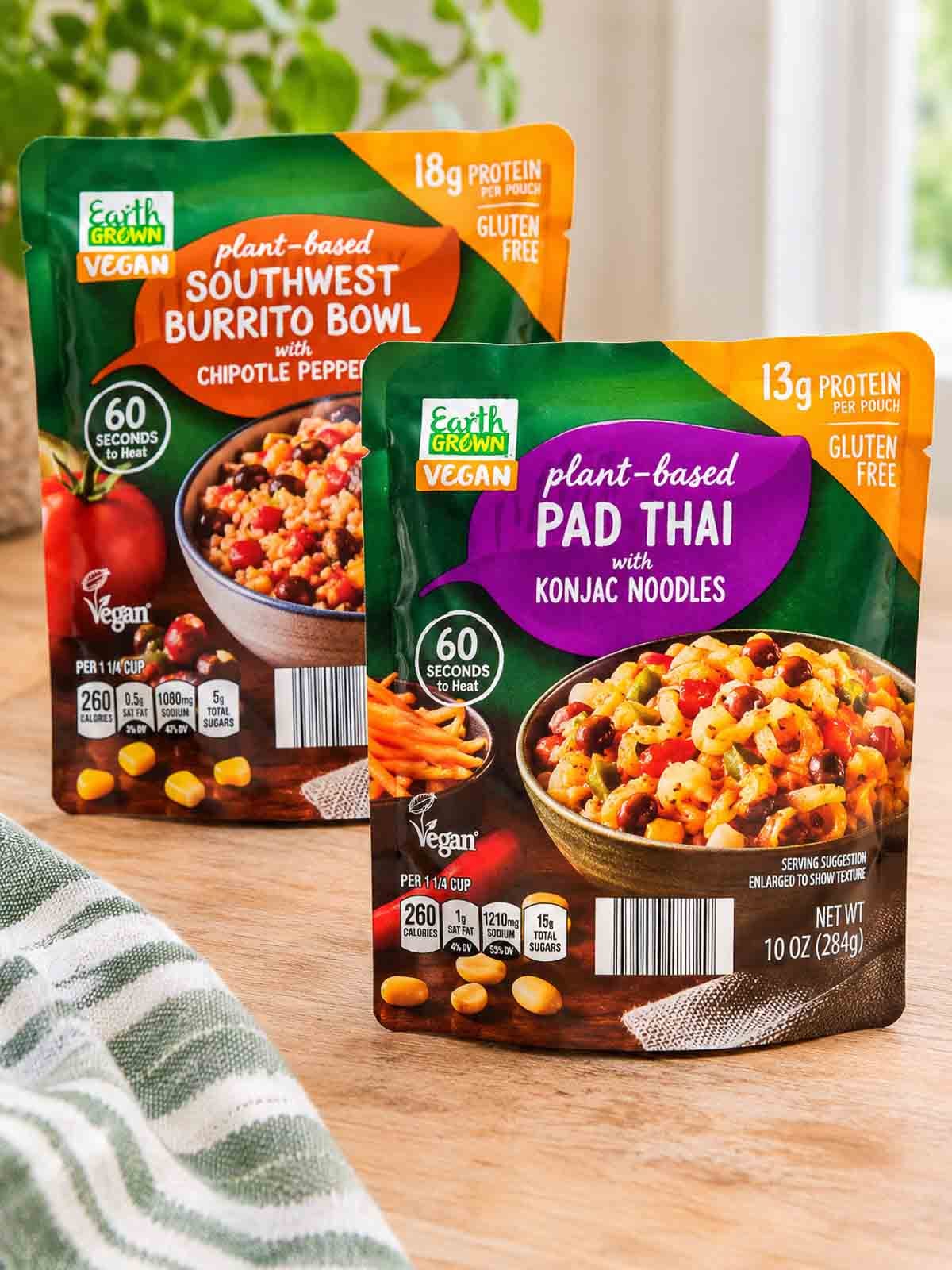
On a recent shopping trip to Aldi, I discovered two Earth Grown vegan meals that caught my attention: a Southwest Burrito Bowl with Chipotle Peppers and Plant-Based Pad Thai with Konjac Noodles. Both come in shelf-stable pouches, making them convenient additions to an emergency pantry.
The Southwest Burrito Bowl is even oil-free! It contains ingredients such as brown rice, black beans, tomatoes, and chipotle peppers.
The Pad Thai contains some added sunflower oil, but that’s something I’m perfectly comfortable with when it comes to emergency preparedness.
One thing worth mentioning is that both meals are higher in sodium than we would normally eat. The Southwest Burrito Bowl contains 1,080 mg of sodium per pouch, and the Pad Thai contains 1,210 mg.
That’s quite a bit, and they’re certainly not something I’d recommend eating every day. But for occasional emergency meals, I’m comfortable making that exception. Each pouch provides 260 calories, with 18 grams of protein in the burrito bowl and 13 grams in the Pad Thai.
The packages provide instructions for heating in the microwave or placing the sealed pouches in boiling water for five minutes. Since they don’t specifically state that heating is optional, I would plan to heat them. That makes them good options for anyone who has an outdoor grill or camping stove available.
My goal isn’t to make sure every emergency meal meets our usual nutritional standards. It’s to have safe, satisfying, plant-based food available if we ever need it. These are simply two products I found at Aldi. Availability and ingredients may vary, so be sure to check the labels when shopping.
Easy Plant-Based Meals You Can Make Without Electricity
One of the things I love about canned beans and vegetables is how easy it is to turn them into meals without using a stove. You don’t necessarily need a complicated recipe, either! Here are some simple ideas.
Black Bean and Corn Bowl
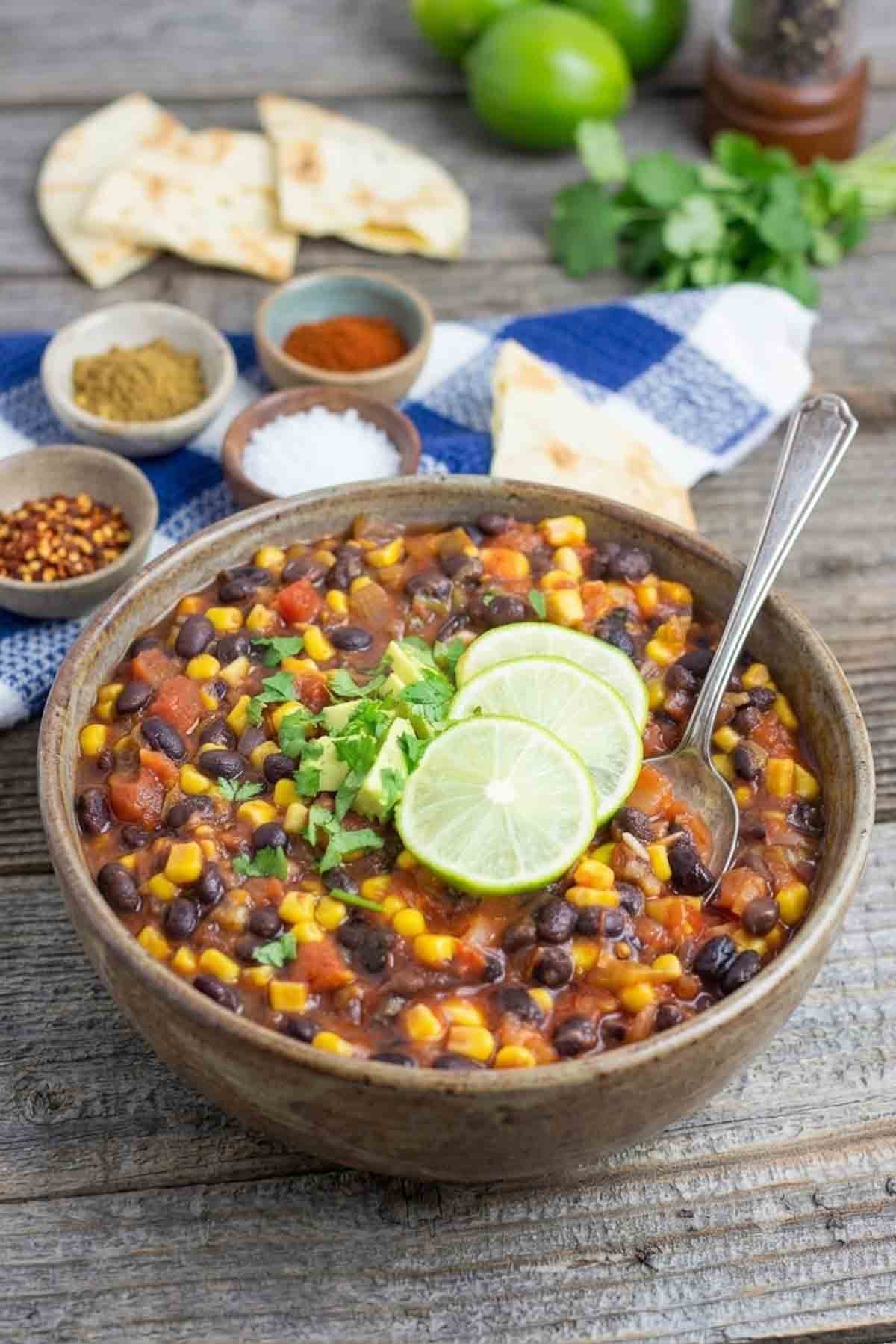
Combine canned black beans, canned corn, and your favorite shelf-stable salsa. Season with chili powder or cumin if desired. Serve with whole-grain crackers or tortilla chips.
Everything is already cooked, so there’s no need to heat it.
Easy Chickpea Salad

Drain and mash a can of chickpeas with a fork. Add a little mustard, dried onion, and seasonings. Serve with crackers or shelf-stable tortillas.
It’s a simple alternative to a traditional sandwich filling. The emergency version omits the avocado and uses canned chickpeas and shelf-stable seasonings.
Peanut Butter and Fruit
Spread peanut butter on whole-grain crackers or bread and serve with canned fruit or applesauce. This makes a quick breakfast, lunch, or snack with absolutely no cooking.
Simple Three-Bean Salad

Drain and rinse three different varieties of canned beans. Toss them with canned corn, vinegar, and dried seasonings. Or use a store-bought, oil-free Italian salad dressing.
It’s filling, colorful, and easy to prepare with ingredients from the pantry.
Cereal and Shelf-Stable Plant Milk
This might be the easiest emergency breakfast of all! Combine your favorite ready-to-eat whole-grain cereal or granola with shelf-stable plant milk. Add dried fruit or nuts for extra nutrition.
Plant-Based Recipes That Can Be Adapted for Emergencies
I already have several recipes on EatPlant-Based that are especially useful for pantry cooking. Some can be adapted using shelf-stable ingredients and eaten without heating.
Easy Black Bean Chili
My Easy Black Bean Chili is one of my favorite examples. It’s made with simple ingredients, including black beans, salsa, and corn.
Emergency Pantry Tip: Use canned corn instead of frozen corn. With ready-to-eat canned beans and salsa, you can combine everything without cooking. It may be different from enjoying a steaming bowl of chili, but it’s still a hearty and flavorful meal!
Black Bean and Corn Salsa
My Black Bean and Corn Salsa is another great option.
Emergency Pantry Tip: Use canned corn, canned tomatoes, and dried seasonings in place of fresh ingredients when necessary.
Serve with whole-grain crackers or tortilla chips for a quick meal or snack.
Easy Bean Salad
My Easy Bean Salad is another recipe worth keeping in mind.
Emergency Pantry Tip: Use canned beans and canned vegetables, and substitute dried seasonings for fresh ingredients. Keep the dressing simple with shelf-stable ingredients.
These emergency versions may not taste exactly like the original recipes, but that’s perfectly fine. The goal is to make nutritious meals using what we have available.
You can also visit my Pantry Staple Recipes collection for more ideas to use when cooking is available.
A Simple 3-Day Plant-Based Emergency Meal Plan
If you’re wondering what eating without electricity might actually look like, here’s an example of three days of simple meals. All of these can be prepared using ready-to-eat, shelf-stable ingredients.
Day 1
Breakfast: Whole-grain cereal with shelf-stable soy milk and dried fruit.
Lunch: Chickpea salad with whole-grain crackers.
Dinner: Black bean and corn bowls with salsa and tortilla chips.
Snacks: Nuts, dried fruit, and applesauce.
Day 2
Breakfast: Peanut butter on whole-grain crackers with canned peaches packed in fruit juice.
Lunch: Three-bean salad with canned vegetables.
Dinner: Black bean chili made with canned corn and salsa, served at room temperature.
Snacks: Trail mix and fruit cups packed in 100% fruit juice.
Day 3
Breakfast: Granola with shelf-stable plant milk.
Lunch: Chickpea wraps with mustard and seasonings.
Dinner: Mixed bean and vegetable bowls with crackers and a simple vinegar dressing.
Snacks: Peanut butter, nuts, and dried fruit.
This is simply a starting point, not a complete nutritional plan for every person. Adjust the quantities and add more substantial foods as needed to provide enough calories and nutrition for your household.
And remember, if you don’t have refrigeration, prepare only what you can safely eat at one sitting. One thing to keep in mind is that emergency meals need to provide enough calories to keep us going, too! Beans and vegetables are wonderful, but I also recommend stocking plenty of calorie-dense foods like peanut butter, nuts, seeds, whole-grain crackers, and granola. During an emergency, getting enough food and energy is just as important as making healthy choices.
Don’t Forget About Water!
Food is important, but having enough safe drinking water is even more essential.
Emergency preparedness guidance recommends storing at least one gallon of water per person per day for a minimum of three days.
For two people, that means at least six gallons for three days. And don’t forget your pets!
You may also need additional water for drinking, hygiene, and other needs, especially during hot weather.
If your household depends on a well pump, like ours, that requires electricity, storing water ahead of time becomes even more important.
I think it’s wise to start with the recommended minimum and gradually increase your supply if you have the room.
What if I can’t use tap water?
It’s also important to remember that having water available doesn’t necessarily mean it’s safe to drink. If local officials issue a boil-water advisory or warn of contamination, follow their instructions and use your stored drinking water until the supply is safe again.
What About Cooking When the Electricity Is Out?
Although I’m focusing on foods that don’t require cooking, having an alternative way to heat food can make an extended power outage much easier.
Two practical options are an outdoor grill and a portable camping stove.
Outdoor Grill
If you already have a gas or charcoal grill, it can be useful for heating canned foods, warming meals, and boiling water.
You don’t necessarily need to prepare elaborate meals. Sometimes just being able to warm a bowl of soup or heat a ready-to-eat meal makes a big difference.
If you’re heating canned foods, transfer the contents to a pot that’s safe for your cooking equipment. Never place a sealed can directly over a flame or heat source.
Portable Camping Stove
A camping stove is another convenient option. These are generally compact and can be useful for boiling water, warming soups, and heating shelf-stable meals according to package directions.
Be sure to keep an appropriate fuel supply and follow the manufacturer’s instructions.
Important safety reminder: Never use a charcoal grill, gas grill, or fuel-burning camping stove inside your home, garage, tent, or other enclosed space. These devices produce carbon monoxide, which can be deadly. Use them outdoors, well away from doors, windows, and vents.
A portable power station may also be useful for certain electrical needs, but cooking appliances often require substantial power. Always check the power requirements of the appliance and the capacity of the power station. This is the one I recently bought. Even with backup cooking options, I still think it’s important to have foods available that require no heating at all.
Food Safety During a Power Outage
One of the biggest challenges during an extended outage is keeping refrigerated foods safe.
According to federal food-safety guidance, an unopened refrigerator generally keeps food cold for about four hours.
A full freezer can maintain safe temperatures for approximately 48 hours, while a half-full freezer generally lasts about 24 hours, provided the door stays closed.
That’s why it’s important to avoid opening refrigerator and freezer doors unnecessarily. Once the power has been out for an extended period, food safety becomes especially important.
Keep these tips in mind:
- Use a refrigerator and freezer thermometer to help monitor temperatures.
- Move refrigerated perishables to an ice-filled cooler if necessary, keeping them at 40°F or below.
- Don’t assume food is safe simply because it looks or smells normal.
- Refrigerate opened shelf-stable foods when the package requires it.
- Discard perishable leftovers that have been above 40°F for more than two hours, or one hour in temperatures above 90°F.
- When in doubt, throw it out.
One reason I like individual packages and smaller cans for emergencies is that they help reduce the need to store leftovers without refrigeration.
How I’m Building Our Emergency Pantry Without Panic Buying
I don’t think preparing for emergencies should mean rushing to the grocery store and filling an entire shopping cart with food we may never use. Instead, I’m taking a gradual approach.
When I go shopping, I can pick up a few extra cans of beans, vegetables, fruit, or other shelf-stable foods. If I find a good sale on something we already eat, that’s another opportunity to add a little to our supply.
I’m also paying closer attention to which foods we could eat without electricity, and rather than storing everything away and forgetting about it, I want to rotate our emergency foods into our regular meals before they reach their best-by dates. That way, we’re not wasting money or food.
Being prepared doesn’t have to be expensive, and it certainly doesn’t have to happen all at once.
My Plant-Based Emergency Supply Checklist
Here’s a simple checklist to help you get started.
Ready-to-Eat Foods
- Canned black beans, chickpeas, and other legumes
- Ready-to-eat lentils
- Canned corn and other vegetables
- Single-serving fruit cups packed in 100% juice, not syrup
- Unsweetened applesauce
- Natural Peanut butter or almond butter
- Nuts, seeds, and dried fruit
- Whole-grain crackers and crispbread
- Shelf-stable tortillas
- Ready-to-eat cereal and granola
- Shelf-stable plant milk
- Salsa and shelf-stable condiments
- Vegan ready-to-eat meal pouches
- Dried seasonings
Water and Essential Supplies
- At least one gallon of water per person per day for three days
- Additional water and food for pets
- Manual can opener
- Flashlights and extra batteries
- Battery-powered or hand-crank radio
- First-aid supplies and necessary medications
- Paper plates, cups, and utensils
- Hand sanitizer and cleaning supplies
- Trash bags
- Outdoor cooking equipment and appropriate fuel, if available
- Working carbon monoxide detectors
- Printed emergency contact information
Remember to adjust your supplies for the number of people in your household, dietary needs, and how long you want your emergency food supply to last.
Free Printable Plant-Based Emergency Grocery List
To make getting started easier, I’ve put together a free printable three-day emergency grocery list for two adults. It includes suggested quantities of shelf-stable plant-based foods, drinking water, and a few essentials that are easy to overlook.
You can print it, take it along on your next grocery trip, and check things off as you gradually build your emergency pantry. There’s no need to buy everything at once!
Frequently Asked Questions
How much emergency food should I store?
A three-day supply is a good starting point. If possible, gradually work toward enough food for a week or two, depending on your household’s needs and available storage space.
Can canned beans be eaten without cooking?
Yes! Commercially canned beans are already cooked and can generally be eaten straight from the can after draining, if desired. Be sure the can is undamaged and follow any instructions on the label.
What are the best vegan emergency foods?
Some of my favorites are canned beans, canned vegetables, nut butters, whole-grain crackers, shelf-stable plant milk, dried fruit, nuts, and ready-to-eat vegan meals.
Do emergency foods have to be oil-free?
Not in my opinion. While I normally follow a whole-food, plant-based diet without added oils, I’m comfortable including some shelf-stable vegan meals that contain oil in our emergency supplies. Having enough safe food to eat is the priority during an emergency.
Can I eat shelf-stable prepared meals without heating?
That depends on the product. Some are fully cooked and specifically labeled ready to eat, while others provide heating instructions that should be followed. Always check the package or contact the manufacturer if you’re unsure.
How should I store emergency food?
Keep unopened shelf-stable foods in a cool, dry place away from direct sunlight, excessive heat, moisture, and possible floodwater.
Check packages periodically for damage and rotate foods into your regular meals before they become outdated.
Final Thoughts: Preparedness Is About Peace of Mind, Not Fear
I hope this article encourages you to take a little time to look through your own pantry and think about what your family might need if the electricity went out for several days.
- You don’t have to buy everything at once.
- You don’t need expensive survival food kits.
- And you certainly don’t need to panic.
For me, this is simply about being a little more intentional with the foods and supplies we already keep at home.
I’m taking this opportunity to gradually stock up on shelf-stable plant-based foods that we can actually eat without electricity, while grocery stores are well stocked.
If we never need to rely on our emergency pantry, that’s wonderful! We’ll simply rotate those foods into our regular meals. But if an unexpected situation does arise, I think we’ll be glad we took the time to prepare.
A little planning today can bring a lot of peace of mind tomorrow.
I’d love to hear from you! Have you started building an emergency food supply? And have you found any convenient, shelf-stable plant-based foods that you especially like? Share your ideas in the comments below. We can all learn from one another!
Emergency Preparedness and Food Safety Resources
For additional information about preparing for emergencies, storing drinking water, and keeping your family safe during power outages, these trusted government resources are excellent places to start.
- CDC: How to Create an Emergency Water Supply — Recommendations for how much water to store, choosing safe containers, and keeping emergency drinking water safe.
- FoodSafety.gov: Food Safety in a Disaster or Emergency — Practical guidance for protecting refrigerated and frozen foods during outages and knowing when food should be discarded.
- CDC: What to Do to Protect Yourself During a Power Outage — Important safety information about carbon monoxide, alternative cooking methods, food and water safety, and other power-outage hazards.
These resources are helpful to bookmark or print ahead of time, especially since internet access may be limited during an emergency.


About Terri Edwards
Hi guys! I’m the content creator behind EatPlant-Based and a licensed Food for Life instructor with the Physicians Committee for Responsible Medicine. I’m passionate about sharing healthy recipes and tips to help others care well for their health and the bodies God has given us. I’m so glad you’re here! Read More…